Introduction
The slow cooker has become a staple in countless kitchens across North America, and for good reason. There’s something deeply satisfying about putting ingredients into a pot in the morning and coming home to a fully prepared meal. This cooking method appeals to busy professionals, families juggling multiple schedules, and anyone who appreciates the flexibility that comes with set-it-and-forget-it meal preparation.
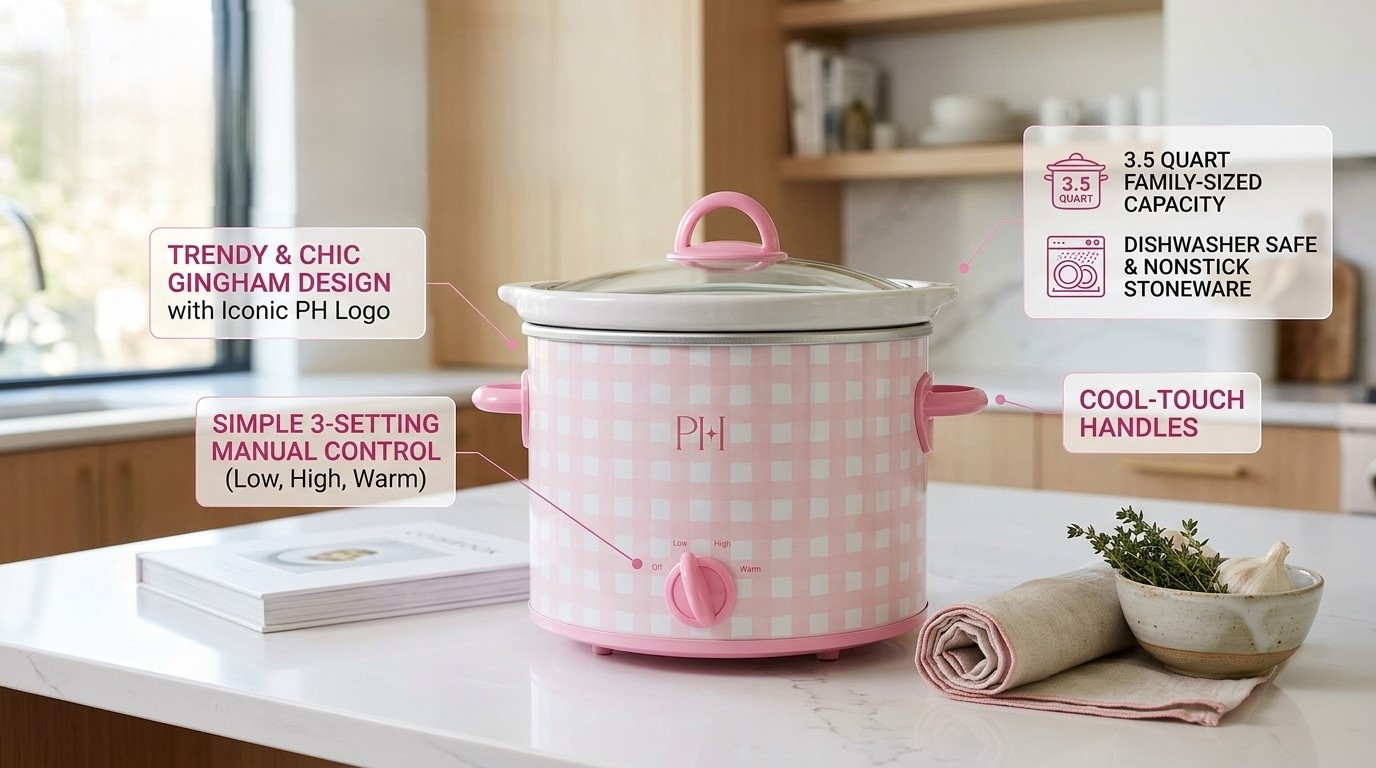
When it comes to selecting a slow cooker, the options can feel overwhelming. Brands range from budget-friendly to premium, sizes vary dramatically, and feature sets differ significantly. The Paris Hilton 3.5-quart manual slow cooker represents one option in this landscape—a medium-to-large capacity appliance that comes in a distinctive gingham pink finish. Understanding what this particular model offers, how it functions, and whether it aligns with your cooking needs requires looking beyond aesthetics to examine practical functionality and real-world application.
This article explores the features and characteristics of this slow cooker, examines how such appliances fit into modern cooking routines, and addresses the considerations that should inform your decision-making process when evaluating slow cookers generally. Our focus is on providing you with substantive information rather than persuasive marketing language.
Key Features and Technical Specifications
Capacity Considerations
The 3.5-quart capacity positions this slow cooker in the mid-to-large range for countertop models. To put this in perspective, a 3.5-quart cooker can typically accommodate meals for four to six people, making it suitable for families or those who enjoy having leftovers for subsequent meals. Understanding capacity matters because it directly affects your cooking options. A cooker that’s too small forces you to make multiple batches or limit recipe selection. One that’s too large may not heat evenly with smaller portion sizes.
This capacity level offers versatility. It’s large enough to handle a whole chicken or substantial cuts of beef, yet manageable enough to fit comfortably on most kitchen countertops without occupying excessive space. Many households find this size strikes a practical balance between functionality and storage considerations.
Temperature Settings and Control
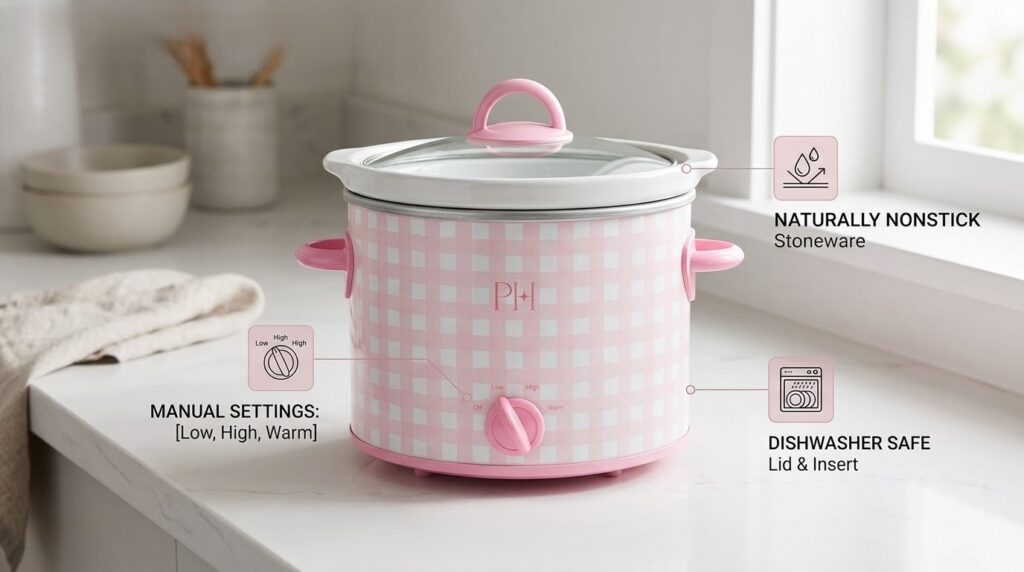
Manual controls offer straightforward operation without requiring digital programming or advanced settings. This slow cooker features three temperature settings: Low, High, and Warm. The Low setting typically operates around 190-200°F, the High setting around 280-300°F, and the Warm setting maintains food at serving temperature without continuing to cook it.
The distinction between these settings affects cooking time and food outcomes. Low settings take longer—typically six to eight hours for most recipes—but allow for gentler cooking that can result in more tender results, particularly with tougher cuts of meat. High settings accelerate the cooking process, usually completing meals in three to four hours. The Warm setting serves primarily as a holding function, useful when meals finish cooking before everyone’s ready to eat.
Manual controls mean you won’t have programmable features like delayed starts or multiple cooking phases. Instead, you simply select your setting, plug in the cooker, and set a timer based on your recipe requirements. This straightforward approach appeals to people who prefer simplicity and don’t need advanced technology for their cooking equipment.
The Stoneware Insert
The ceramic stoneware insert is significant to how this cooker performs. Stoneware heats evenly and retains heat effectively, which contributes to consistent cooking results. The naturally nonstick surface means food is less likely to stick to the bottom and sides compared to uncoated stoneware, potentially reducing the need for oil or butter when browning ingredients first.
The fact that the stoneware insert is dishwasher safe matters for practicality. Slow cooker cleanup can sometimes feel tedious, particularly when food has caramelized or stuck slightly. Being able to place the insert directly into your dishwasher simplifies this process considerably and reduces the time spent on post-cooking cleanup.
It’s worth noting that while the stoneware insert is removable and dishwasher safe, the main cooker body itself should not be immersed in water. Cleaning the exterior and interior of the main unit should be done carefully to avoid damaging the electrical components.
Design and Finish
The gingham pink finish represents a departure from the typical stainless steel or black options that dominate the slow cooker market. This aesthetic choice means the appliance makes a visual statement on your countertop. For some people, this appeals as a stylish addition to kitchen décor. For others, the aesthetic may not align with their design preferences or kitchen color scheme. Unlike removable inserts, the exterior finish is permanent, so visual appeal should factor into your decision-making.
The cooker design itself needs to balance functionality with form. A well-designed slow cooker should have easy-to-read controls, a shape that allows for efficient stacking (if you plan to store it), and a size that fits standard kitchen cabinet shelves or countertop space.
How Slow Cookers Fit Into Modern Cooking Routines
Meal Preparation Flexibility
The primary advantage of slow cooking is preparation flexibility. You can combine ingredients in the morning before heading to work, then return home to a prepared meal. This approach appeals strongly to people with demanding schedules who struggle to find time for cooking preparation during the week.
Several meal preparation models work well with slow cookers. The most common involves browning ingredients in a separate pan first (if desired), adding everything to the stoneware insert, setting the temperature, and allowing the cooker to work unattended. Some recipes work equally well without browning meat first. The slow cooking environment brings out flavors through long, gentle heat rather than requiring initial searing.
Another approach involves prep work the night before. You can assemble ingredients in the stoneware insert, refrigerate it overnight, then place it in the cooker the following morning. This method requires letting the insert warm up to room temperature first in some cases, depending on the manufacturer’s recommendations, though many modern cookers handle cold inserts without issue.
Recipe Suitability
Slow cookers work exceptionally well for certain types of meals. Stews, chilis, braises, soups, and curries all benefit from extended cooking times that allow flavors to develop and tougher cuts of meat to become tender. Beans cook beautifully in slow cookers, and dried legumes become soft and edible without requiring significant pre-soaking.
Less ideal candidates for slow cooking include delicate fish, seafood that requires brief cooking, or dishes where you want significant browning or crispy textures. Pasta and rice dishes can work, but adding these ingredients requires timing precision to prevent mushiness. Roasted vegetables, grilled items, and anything requiring high-heat finishing falls outside the slow cooker’s scope.
The technique suits budget-conscious cooking exceptionally well. Tougher, less expensive cuts of meat—chuck roast, brisket, pork shoulder—transform into tender, flavorful meals through low and slow cooking methods. A three-dollar-per-pound cut becomes something diners might otherwise associate with premium pricing.
Energy Consumption Considerations
Slow cookers use relatively modest amounts of electricity compared to conventional ovens. A slow cooker operating on High might draw 150-250 watts, while a traditional oven uses several times that amount. Over an 8-hour cooking period using Low setting, the energy consumption remains minimal, making this an economical approach to meal preparation, particularly during warmer months when using your oven would also heat your kitchen.
This efficiency makes sense thermodynamically. You’re not heating an entire oven chamber, preheating to specific temperatures, or cycling heating elements on and off. Instead, heat distributes through an insulated vessel over many hours, allowing gentle cooking without energy waste.
Who May Find This Slow Cooker Suitable
Time-Constrained Families
Families managing multiple schedules—children in sports, parents working demanding jobs—often struggle with meal timing. A slow cooker enables putting together meals during downtime rather than during the chaotic dinner preparation window. A working parent might use a slow cooker several mornings per week, knowing dinner will be substantially prepared when needed.
Budget-Conscious Households
The economic benefits of slow cooking extend beyond electricity savings. Tougher cuts of meat cost significantly less than premium options, yet slow cooking renders them just as tender and flavorful. Bulk purchases of discounted meat can be portioned and frozen, then used in slow cooker recipes throughout the month.
Single People and Small Households
While this cooker is large enough for families, it also works well for single people or couples who appreciate having prepared meals they can portion and freeze. Making a full batch of chili or stew, then dividing it into individual portions for freezing, means you spend minimal cooking effort but have multiple quick meals available throughout the month.
Entertaining and Hosting
Slow cookers serve pragmatic functions when hosting gatherings. Large-batch soups, chilis, or appetizer meatballs can simmer throughout an event, keeping food at serving temperature without drying out. The Warm setting proves particularly useful in this context, allowing you to finish other preparations while the slow cooker handles temperature maintenance.
People New to Cooking
The simplicity of slow cooker preparation appeals to novice cooks. Following most slow cooker recipes requires minimal technique beyond chopping ingredients and adding them to the pot. There’s no need to monitor cooking progress, adjust heat levels, or worry about burning or overcooking food dramatically. The long cooking time provides a forgiving margin for error.
Important Considerations Before Purchasing
Kitchen Storage and Space
While a 3.5-quart slow cooker isn’t enormous, it does require countertop or cabinet storage. If your kitchen space is already at capacity, consider whether you have consistent access to an outlet for countertop storage, or if you’d need to store it elsewhere and bring it out when needed. The latter approach works but makes the appliance less likely to be used if accessing it requires significant effort.
Cooking Styles and Frequency of Use
Honest assessment of your actual cooking patterns matters. If you’re someone who genuinely prepares meals ahead and enjoys having options in your freezer, a slow cooker will work hard in your kitchen. If you typically make last-minute decisions about dinner, you may find this appliance underutilized. The question isn’t whether slow cookers are generally useful—they demonstrably are for many people—but whether they match your specific lifestyle and preferences.
Manual vs. Programmable Options
This model features manual controls rather than digital programming. This means no delayed start features or automatic switching from cooking to warming. For some people, this simplicity is ideal. For others, the inability to program a specific cooking start time limits the appliance’s utility. Consider whether you’d actually use programmable features or if manual operation suits your needs perfectly fine.
Aesthetic Preferences
The pink gingham finish is distinctive. Before committing, honestly evaluate whether this design element appeals to you or whether it would feel out of place in your kitchen. Aesthetic preferences aren’t shallow—if you dislike looking at something you use regularly, that affects how often you’ll reach for it.
Durability and Long-Term Use
Slow cookers are relatively straightforward appliances with few components that fail. The main concern is typically the heating element, which can occasionally malfunction after years of use. Stoneware inserts are durable but can crack if dropped or subjected to extreme temperature changes. This particular model includes a removable insert, which simplifies replacement if the original cracks.
Understanding Slow Cookers in a Broader Context
How They Compare to Pressure Cookers
Pressure cookers and slow cookers serve different purposes, though both enable quick meal preparation. Pressure cookers use high heat and pressurized steam to cook food rapidly—often completing in 20-30 minutes what takes a slow cooker hours. They work well for batch cooking beans, tough meats, and soups when time is severely limited.
Slow cookers take the opposite approach: low heat over extended time. They’re less time-sensitive (if dinner runs late, the food stays warm), excel at developing deep flavors through slow cooking, and require no pressure management or safety precautions beyond basic awareness. The choice between them depends on your typical schedule and cooking preferences.
Comparison with Dutch Ovens and Stovetop Cooking
Dutch ovens serve similar functions to slow cookers in some respects—they braise, stew, and create tender results from tough cuts. The key difference is supervision. Dutch oven cooking requires monitoring, occasional stirring, and attention to heat levels. Slow cooker cooking requires none of this. Dutch ovens do offer more versatility for browning and finishing dishes with high heat. They also work on the stovetop or in conventional ovens, providing multiple cooking methods.
For people who enjoy the cooking process and have time to monitor a meal’s progress, Dutch oven cooking may appeal more. For people seeking hands-off cooking, slow cookers eliminate the active component entirely.
Slow Cookers Versus Oven Braising
Oven braising at low temperatures (around 300°F) achieves similar results to slow cooking in less time—often 2-3 hours instead of 6-8. The trade-off is energy consumption (ovens use significantly more electricity) and heating your kitchen (a concern in warm months). Slow cookers maintain lower temperatures throughout, which affects the chemical changes occurring in food but achieves equivalent tenderness and flavor development, just more gradually.
Practical Usage Ideas and Applications
Breakfast and Brunch Possibilities
Beyond traditional dinner applications, slow cookers enable breakfast preparation. Overnight oatmeal, French toast casseroles, or breakfast burritos can be assembled the night before and cooked overnight or early morning, providing quick breakfast options. While not universally common, these applications expand the cooker’s utility beyond typical evening meals.
Batch Cooking and Freezing
The 3.5-quart capacity makes this cooker ideal for batch cooking. A single batch of chili, soup, or curry can be divided into portions and frozen in individual containers, creating multiple quick meals from one cooking session. This approach makes sense economically—you spend effort once but reap benefits over several weeks.
Slow Cooker Sides and Complementary Dishes
Slow cookers aren’t limited to main dishes. Rice, pilaf, cornbread, mac and cheese, and various side dishes cook successfully at low temperatures. Understanding what types of foods pair with slow cooking technique expands your options considerably. Many home cooks develop repertoires of slow cooker recipes that cover proteins, vegetable sides, and starches, creating complete meals within a single appliance.
Holiday Entertaining and Potluck Contributions
The Warm setting makes this cooker valuable for gatherings. Dishes can be prepared at home, transported in the slow cooker, and kept at serving temperature throughout an event. This is particularly useful for soups, stews, appetizer meatballs, or mulled beverages.
Frequently Asked Questions
Can you use this slow cooker for overnight cooking?
Extended cooking times—up to 10-12 hours on Low setting—are generally safe with slow cookers, though most recipes are designed for 6-8 hour durations. If attempting overnight cooking, ensuring your settings are correct and that the cooker will automatically maintain appropriate temperatures is important. Always verify safety guidelines before attempting extended unattended cooking.
Is the stoneware insert essential for slow cooker functionality?
Yes, the stoneware insert is where food actually cooks. It distributes heat evenly and retains warmth, making it central to how the appliance functions. Having a removable insert (as this model does) is convenient because you can transfer it directly to the table, refrigerate leftovers in it, and replace it if it ever cracks.
What size portions does a 3.5-quart cooker actually hold?
A 3.5-quart slow cooker typically comfortably accommodates meals for four to six servings. For best results, most recipes recommend filling the cooker between half-full and three-quarters full. Filling it completely may result in uneven cooking or overflow, while too-empty may cause uneven heat distribution or excessive browning.
Does the pink finish affect heat distribution or cooking quality?
The exterior finish is purely aesthetic and doesn’t influence internal cooking performance. The stoneware insert and internal heating elements determine how food cooks. The pink gingham finish is a cosmetic choice that affects appearance only.
How do manual controls compare to digital timers for ease of use?
Manual controls are genuinely simpler—you select Low, High, or Warm, and cooking begins immediately. There’s no learning curve or menu navigation. Digital timers offer programmability but require understanding the interface. For straightforward cooking needs, manual controls eliminate unnecessary complexity.
Can you brown ingredients first in this cooker?
The stoneware insert shouldn’t be used on direct heat like a stovetop—it’s designed for the slow cooker’s indirect heating. To brown ingredients, use a separate skillet, then transfer browned items to the slow cooker insert. This extra step isn’t required for all recipes but enhances flavor in many.
What happens if the stoneware insert cracks?
Cracked inserts should be replaced to prevent potential ceramic debris in food and maintain even heating. The advantage of removable inserts is that replacements are often available separately, so a cracked insert doesn’t require replacing the entire appliance.
How often does a slow cooker like this typically need replacement?
Well-maintained slow cookers often last a decade or more. The heating element may eventually wear out, making the appliance no longer function effectively. Removable inserts (as this model has) can be replaced independently if they crack. Most failures occur gradually rather than suddenly, so you’ll likely have warning signs before the appliance stops working entirely.
Conclusion
The slow cooker remains relevant in modern kitchens because it solves a genuine problem: how to create prepared meals when your schedule doesn’t easily accommodate traditional cooking methods. The Paris Hilton 3.5-quart manual slow cooker offers a straightforward, no-frills approach to this challenge. Its mid-to-large capacity works for families and batch cooking. Manual controls eliminate unnecessary complexity. The dishwasher-safe stoneware insert simplifies cleanup.
Whether this specific model suits your needs depends on several personal factors: your typical cooking schedule, kitchen space availability, aesthetic preferences, and whether slow cooking methods align with the types of meals you enjoy preparing. No appliance is universally ideal—the best choice depends on matching the tool to your actual lifestyle and cooking patterns.
If slow cooking appeals to you and you appreciate straightforward operation without digital programming, this cooker represents a reasonable option to explore further. Understanding both its capabilities and limitations helps you make an informed decision that serves your kitchen well.